Camera Fundamental Learning Part 2
Welcome back to our Camera Photography Fundamentals series! In our first post, we explored the magic of aperture. Now, let’s talk about another key ingredient that can completely transform your shots: shutter speed. Whether you want to freeze a split-second action shot on the field or create dreamy motion blur, understanding shutter speed is your ticket to total creative control.
What Is Shutter Speed?
Shutter speed is essentially how long your camera’s shutter stays open when you take a photo. Think of it like a tiny curtain that opens and closes super fast. The longer it’s open, the more light hits your camera sensor. The shorter it’s open, the less light you get. But it also affects how motion is captured—so it’s not just about brightness, it’s about whether your photo is crisp or shows movement.
Shutter speed refers to how long your camera’s shutter stays open when you take a photo.
It’s measured in fractions of a second, such as:
- 1/1000
- 1/500
- 1/250
- 1/60
- 1/30
A fast shutter speed means the shutter opens and closes very quickly.
A slow shutter speed means the shutter stays open longer.
The amount of time the shutter is open affects two main things:
- How much light enters the camera
- How motion is captured
This is why shutter speed is so important—it controls both exposure and movement.
How Shutter Speed Affects Your Images
When the shutter opens, light hits the camera sensor.
The longer it stays open, the more light comes in. The shorter it stays open, the less light you get.
But here’s the part many beginners don’t realize right away:
Shutter speed also controls whether motion appears sharp or blurred.
Fast shutter speed = sharp, frozen moments
Slow shutter speed = motion blur and movement
Neither one is “right” or “wrong.” It all depends on what you’re trying to capture.
When to Use Fast Shutter Speeds
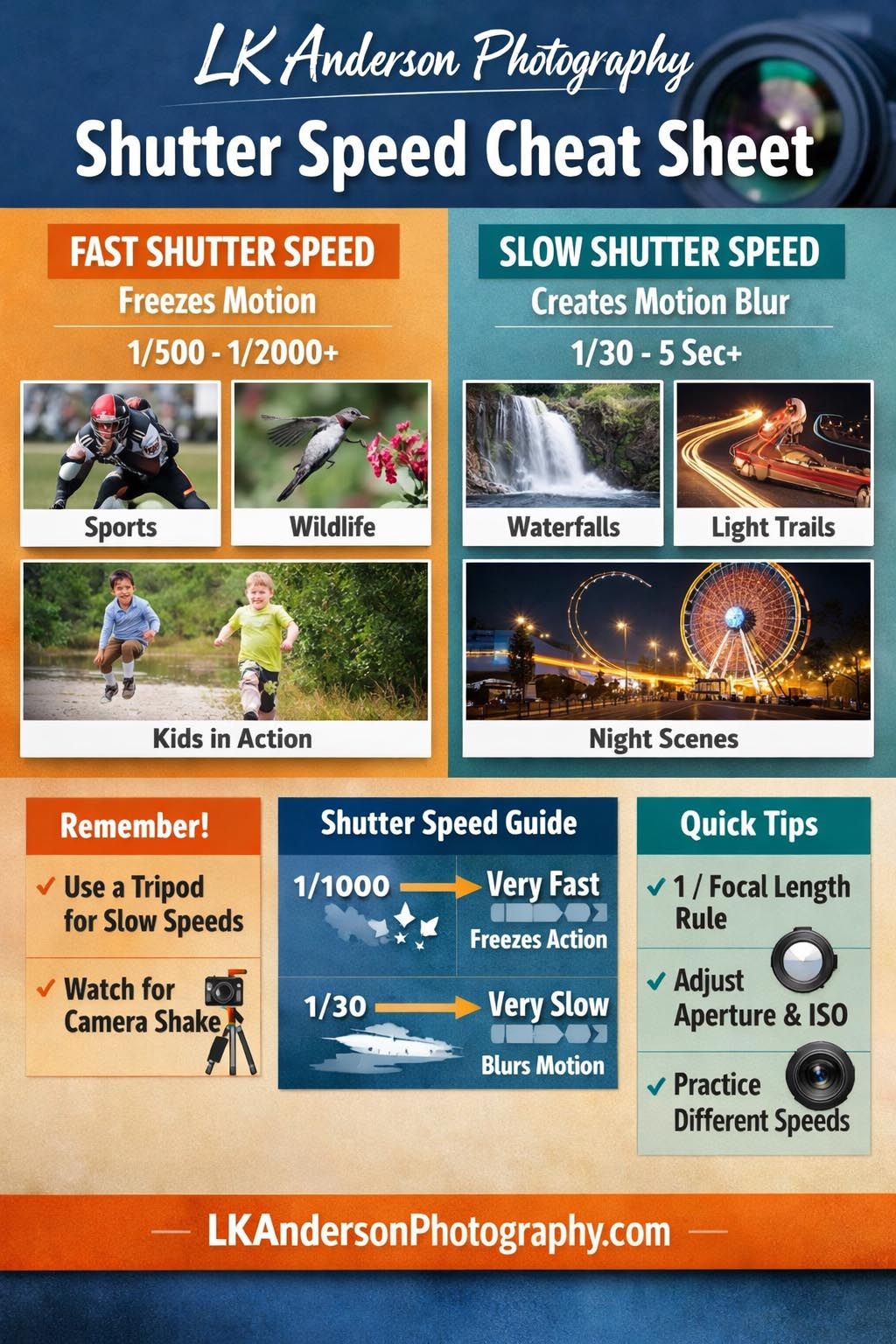
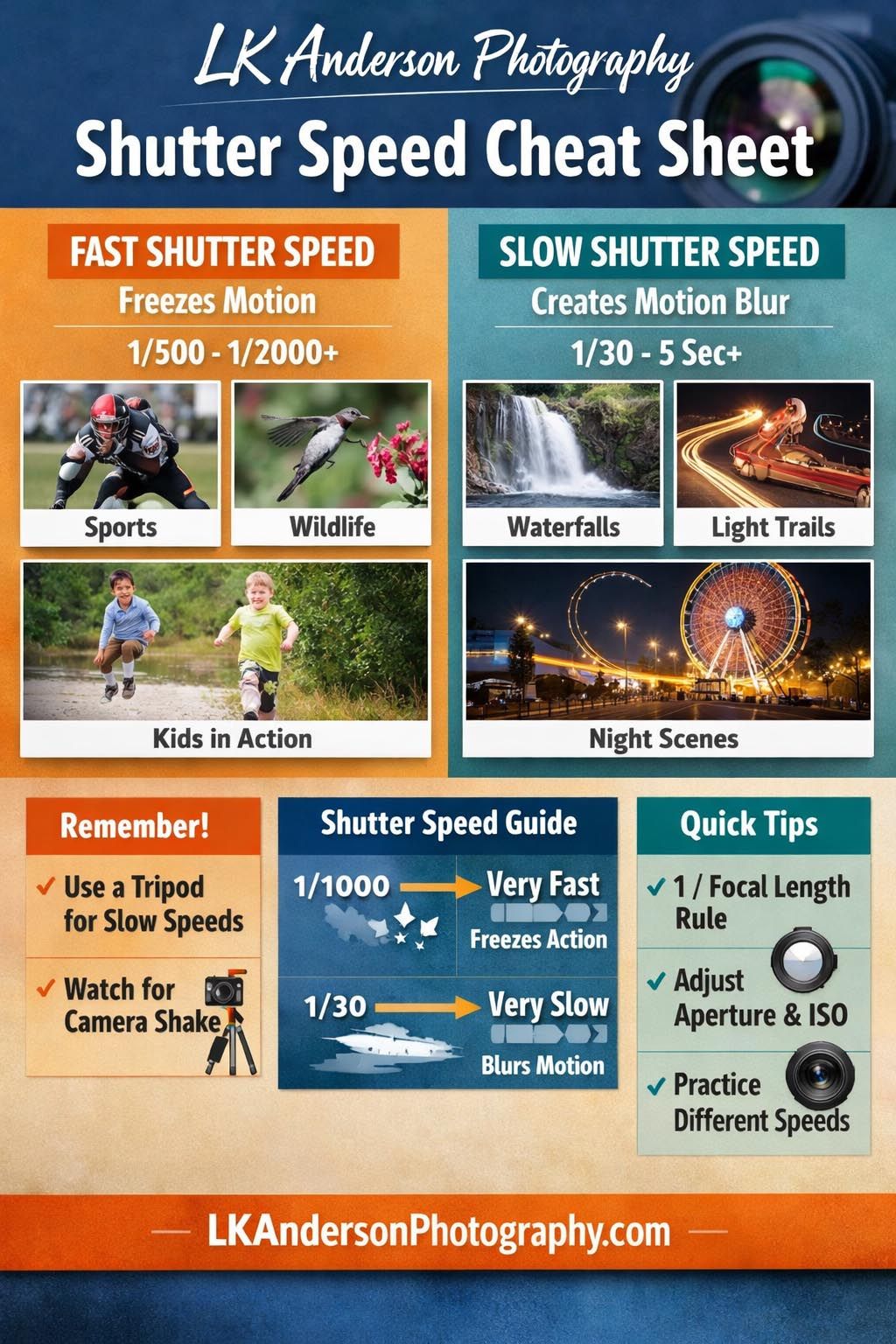
Fast shutter speeds (like 1/500 or 1/1000 of a second) are your best friends when you’re freezing action. If you’re out there shooting sports—like those Friday Night Lights moments—or capturing a dancer mid-leap, a fast shutter speed will keep every detail sharp. It’s like hitting pause on a moving scene. Fast shutter speeds are perfect when your subject is moving and you want everything to look crisp and sharp.
Some great times to use a fast shutter speed:
- Sports and action shots
- Kids running or playing
- Dancers jumping or spinning
- Animals in motion
- Windy outdoor scenes
For sports photography, I often start at 1/800 or higher, especially for football, soccer, or fast-moving athletes. This allows me to freeze the action and capture details like facial expressions, flying hair, or a ball mid-air.
If you’ve ever taken a photo and thought, “Why does this look blurry?” — chances are your shutter speed was too slow for the movement happening in the scene.
When to Use Slow Shutter Speeds
On the flip side, slow shutter speeds (like 1/30 of a second or even a few seconds) let you show motion blur. This is awesome for creative shots—like capturing the flow of a waterfall, the rush of a crowd, or even light trails at night. Just remember you might need a tripod to keep your camera steady so that only the moving parts of the scene blur, not the whole photo.
Shutter Speed and Camera Shake
One thing to keep in mind is camera shake.
If your shutter speed is too slow and you’re hand-holding the camera, even your own movement can blur the image.
A good general rule:
- Your shutter speed should be at least 1 over your focal length
Example: Shooting at 85mm? Try to stay at 1/100 or faster when handheld.
This simple guideline can save you from a lot of frustration.
Practice Tip: Learn by Doing
One of the best ways to learn shutter speed is to practice with the same subject.
Try this:
- Photograph a moving subject at several shutter speeds
- Start fast (1/1000)
- Slowly work your way down (1/500, 1/250, 1/60)
- Compare the results
You’ll quickly see how motion changes as the shutter slows—and that’s when things really click.
Final Thoughts
Shutter speed is more than just a technical setting—it’s a creative tool. It helps you decide whether to freeze a moment in time or show the energy of movement within it.
The more you practice, the more natural it becomes. Don’t be afraid to experiment, make mistakes, and try new things. That’s how confidence behind the camera is built.
In the next post of this series, we’ll complete the triangle by talking about ISO and how to balance all three settings together for total control.
Conclusion: Practice and Play!
Shutter speed is all about experimenting. Take a day to shoot the same subject at different speeds—freeze it, blur it, and see what you love. The more you play with shutter speed, the more you’ll start to see the world in creative new ways—one click at a time